
Chapter I
When images began to mean something to me
Readingtime: 7 Minuten
When Images Suddenly Began to Mean Something to Me
Not everyone grows up with a clear plan to one day become a photographer. A camera at twelve, a crystal-clear goal in sight – none of that applied to me. Quite the opposite.
I went through many different stages – the military, chemistry, further training, jobs that had far more to do with organization than creativity. And yet, there were always these quiet moments, somewhere between everyday life, work, and travel, when a scene simply… struck me. A beam of light, a landscape, a fleeting moment.
This is where it began – something that, in hindsight, meant far more than I realized at the time.
When snapshots were taken with compact cameras
Every photographer has a rough idea of when their first interest in photography appeared, or when the idea of a composition first sparked in their mind. For me, as I mentioned above, it wasn’t in childhood. There’s no story of “I picked up a camera and instantly knew that photography was my calling.”
No one in my family really took photos, either. There were the embarrassing snapshots taken by parents or friends — first steps, a Christmas celebration, a family gathering — all of which eventually ended up in my mother’s dusty photo albums. Looking back now, there certainly wasn’t any real interest in photography behind them, nor the idea of a thoughtful composition.
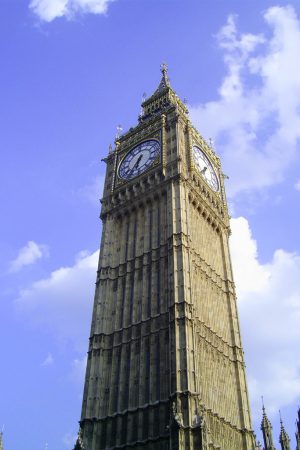
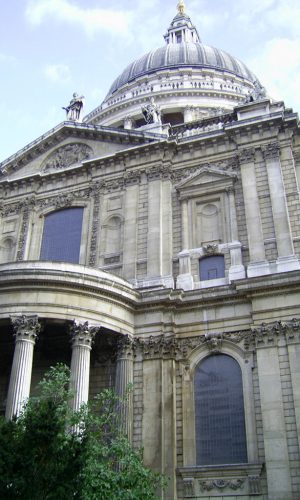
My path into photography is rather unspectacular, and for many young people today it’s probably difficult to relate to because of how advanced technology has become. Back then — and I’m only talking about roughly 20 years ago — you didn’t have incredible smartphones on every corner, devices that today already give you a solid foundation for professional photography. Sure, there were camera phones, but their capabilities were nowhere near what we have now.
I vaguely remember that my first “camera phone” was a Sony Ericsson K800i. No way to adjust ISO, aperture, or shutter speed. Instead, you had the luxury of little “scene modes” for different situations. But that phone wasn’t the one I used to capture my first images during my first small adventure.
In late summer 2006, I flew abroad alone for the very first time. How exciting it was! The big English city of London was my destination. A completely new perspective on people and the world opened up to me, and I knew I needed something to preserve this trip. Alongside the few things I packed into my suitcase, I took my mother’s Praktica DCZ 5.5 digital camera. I hadn’t looked into it at all, and I knew absolutely nothing about the exposure triangle — let alone how to adjust any of it. So, naturally, the camera’s automatic mode was the greatest thing ever.
When the adventure with a camera began
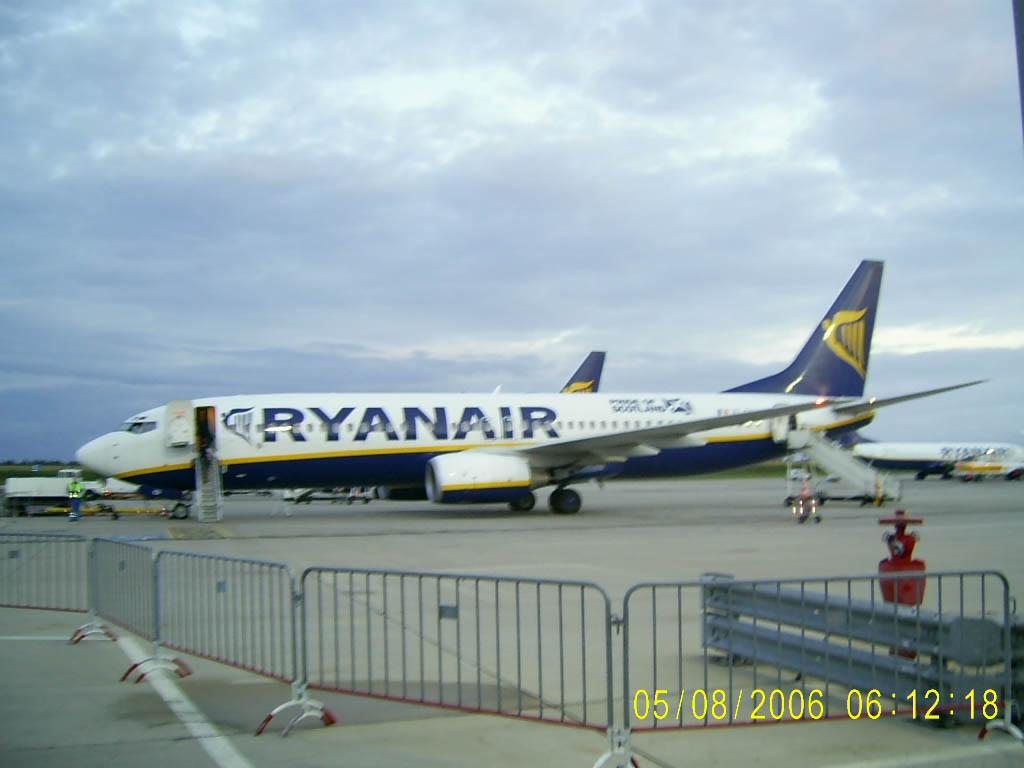
The journey truly began for me just before boarding the Ryanair plane. That’s when I took my very first picture. Thanks to the camera’s automatic mode, it looked fantastic to me. The fact that the date and time were boldly printed onto the image didn’t bother me at all back then. I also didn’t notice how crooked, blurry, and vignetted the photo was.
A perfect picture to show people later — or so I thought. In the end, maybe five people ever saw it. Even visually, there was absolutely nothing stimulating about it, except perhaps the bright yellow timestamp screaming across the corner.
And that’s pretty much how the entire “London experience” went. Out of more than 900 photos, it’s painfully obvious that I had no idea about photography and was doing far more “snapping” than actual photographing. The automatic mode must have been overheating, trying to compensate for my lack of knowledge.
None of the photos were edited, of course — I had no idea that editing was even a thing.
While I was walking through the city, you can occasionally spot a hint of aesthetic intention, maybe even an idea of composition — but those moments are definitely rare. And besides, city photography or “street photography” was never really my thing, though I didn’t know that back then.
I only truly realized it when I took a day trip to Stonehenge.
When Landscapes Captured My Heart
Stonehenge.
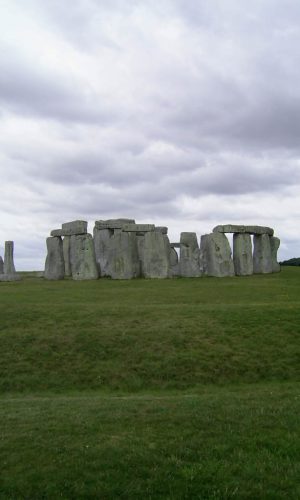
A prehistoric monument in the south of England. People speculate that it must have had something to do with the heavens, that gatherings were held here regularly. Even today, this small ancient wonder still attracts people and leaves them guessing. Just like it did with me almost 20 years ago. I knew I wanted to see it while I was already nearby.
It wasn’t until years later that I realized this moment was what sparked my love for landscape photography.
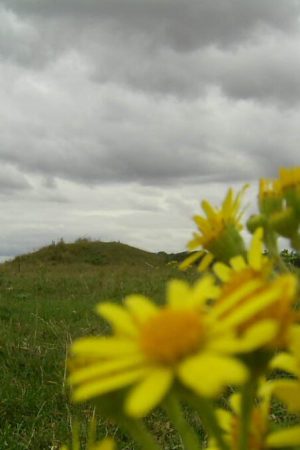
The sky was covered in thick, heavy clouds, and a soft, diffused light wrapped itself around the scene – like a lamp shining through fog. The grassy plain around the monument was swept by the wind, and there I stood, right in the middle of it, with my mother’s digital camera in hand. Looking at the photos today, I can see that I had ideas for more intentional, creative images, but they were poorly executed. Exposure, depth of field, and everything else you can adjust were far from what I would do today. For that, I can thank the automatic mode and my complete lack of knowledge about photography back then.
But despite the poor images, what I enjoyed — and what I still remember vividly — was searching for perspectives and trying to capture the atmosphere of the place. The quietness of the moment, the desire to freeze it in time. Those are the things I still love about landscape photography today.
Preferably as far away from roads, cities, and people as possible — so nothing disturbs the silence.
In the five years that followed, not much happened in terms of photography. I took a city trip to Paris, carrying a Canon PowerShot A620 in my backpack, and returned home without any noteworthy images. Looking back, the photos resemble basic phone snapshots — just quick moments captured without intention. I’ll spare everyone from seeing those.
Even though nothing changed for me photographically, a lot happened in my life. After completing my training in the chemical industry, I began my service in the military. It was an exciting time, but due to the little free time I had, it wasn’t exactly filled with creative output. I traveled quite a bit across Germany during those years, but I never brought a camera with me. The space in my bags was reserved for equipment that had to be transported from course to course. And at that time, I didn’t have a car of my own to drive somewhere and let creativity unfold.
When I Discovered That Compact Cameras Wouldn’t Take Me Further
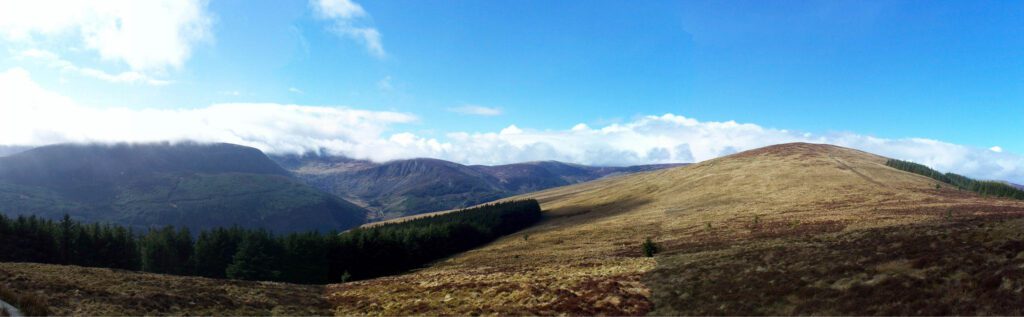
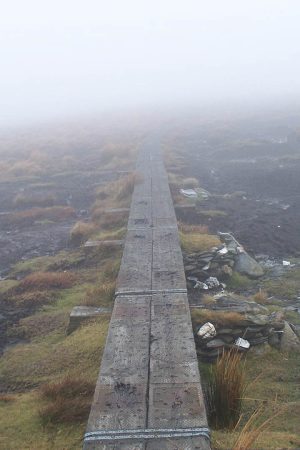
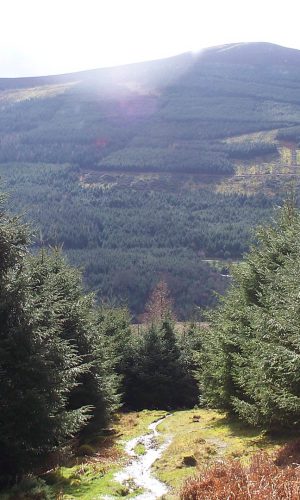
I mentioned those five years without any noteworthy photography. In early 2011, we planned a hiking trip through the beautiful landscapes of Ireland. Even during the planning phase, I already knew that the scenery along the Wicklow Way would be balm for the soul. So what would be appropriate to bring?
A camera!
My very first digital camera of my own: the Kodak Z885. It offered the same features as the compact cameras I had used before — automatic mode and a few scene programs. This time, however, I spent a bit more time experimenting with it and even managed to create my very first “panorama image.” With that camera, it was actually fairly intuitive, since you simply had to align the edge of one photo with the edge of the live view for the next.
During the hike, I did manage to capture a few good photos, but I already felt that there was room for improvement. I slowly began to look deeper into composition and photography — still nowhere near enough to create images with that “wow” effect.
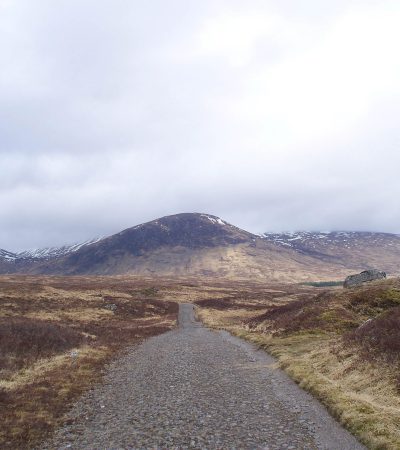
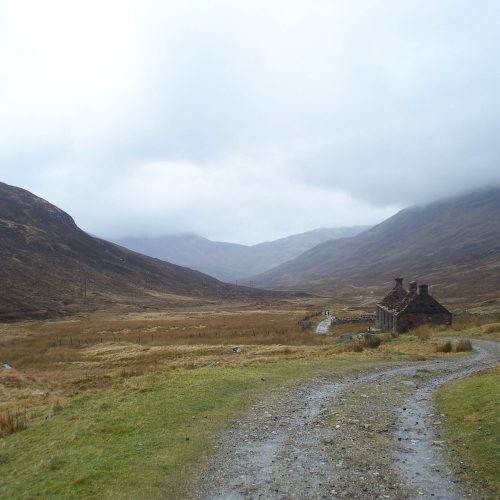
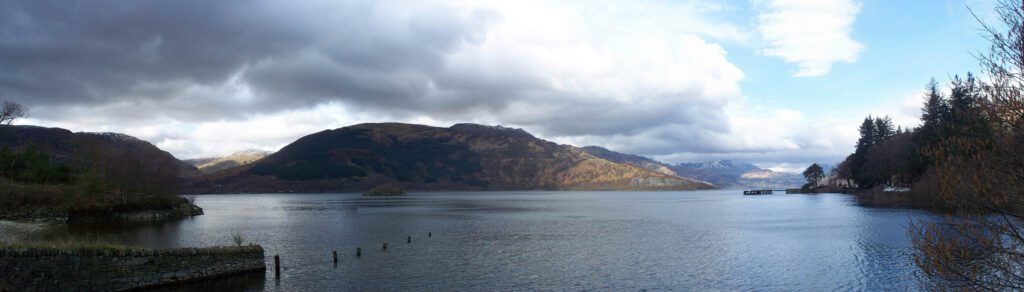
Two years later, I brought the same digital camera with me to Scotland. This time, however, I came prepared and even had a small, wobbly tripod with me to avoid the shaky shots I had taken in low light in the past.
The first photos were taken from the airplane during our descent over the Highlands, and I was already excited to see the mountains and hills up close.
The reason I traveled to Scotland was once again a long-distance hike along the West Highland Way. With a tent in my backpack and the Kodak Z885 that had already proven itself in Ireland, I was ready to take on nearly 160 kilometers in hopes of capturing beautiful landscape images. After preparing myself a bit more photographically, I knew there would be more than one visual feast waiting for me — and I wasn’t disappointed.
In the Lowlands and Highlands of Scotland, I took my first photos with that little compact camera that truly reflected how I felt along the way. Wide valleys surrounded by towering mountains, like guardians standing in line, guiding me along the trail. I climbed and photographed my first mountains — or Scottish “Munros” — among them Ben Lomond and the highest of them all, Ben Nevis.
It was in Scotland that I truly felt the limitations of the Kodak camera. I wanted more. I wanted to get closer to the mountains at times, but also capture more of the surroundings. And that simply wasn’t possible with the little compact camera — at least not in the way I imagined it. That thought stayed with me all the way home until the plane touched down in Germany.
Then everyday life and the military took over again, and I thought very little about photography — until a small coincidence eventually led me to my first DSLR camera.
Which journey sent my photographic learning curve shooting upward, which bitter lessons I had to learn, and how I created my first images with real “wow” effect — all that I’ll tell you in the next chapter.
© 2025 by Martin M. Hoffmann

